
Call us now :08071931998
 Send Inquiry
 Send Inquiry
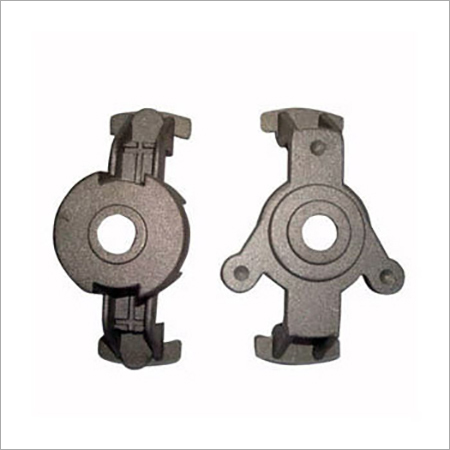
Aluminium Alloy Castings
Price 300-350 INR/ Kilograms
MOQ : 500 Kilograms
Aluminium Alloy Castings Specification
- Product Type
- Aluminium Alloy Casting
- Casting Process
- Pressure Die Casting
- Application
- Automobile, Machinery, Electrical and Construction Industries
- Method
- Die Casting
- Surface Treatment
- Shot Blasted / Sand Blasted
- Weight (kg)
- 0.5 - 50 kg
- Color
- Silver Grey
- Corrosion Resistance
- High
- Minimum Order Quantity
- As per requirement
- Tensile Strength
- Up to 230 MPa
- Packaging Type
- Wooden Box / Carton
- Finish
- Smooth / Custom Finish
- Material
- Aluminium Alloy
- Grade
- LM-6, LM-24 or as specified
- Tolerance
- ±0.05 mm
- Hardness
- 60-90 HRB
- Shape
- Customized as per requirement
Aluminium Alloy Castings Trade Information
- Minimum Order Quantity
- 500 Kilograms
- Supply Ability
- 500 Kilograms Per Day
- Delivery Time
- 8-10 Days
- Sample Available
- Yes
- Sample Policy
- Sample costs shipping and taxes has to be paid by the buyer
- Packaging Details
- As per the requirement
- Main Domestic Market
- All India
About Aluminium Alloy Castings
Counted amongst as the prominent manufacturers, exporter and suppliers in this domain, we are involved in offering an superior quality Aluminum Alloy Castings. Our offered product is used in machines and are widely appreciated for their rust resistance and superior strength. The provided castings are perfectly manufactured under the strict supervision of our deft team of professionals using combination of aluminum and bronze keeping in mind market standards. We offer this Aluminum Alloy Castings in various specifications according to the different need of our customers.
Features:
- Dimensional accuracy
- Robustness
- Anti-corrosive
- Easy to install
Specification
| Minimum Order Quantity | 1000 Kilogram Onwards |
| Casting Temperature | 750 |
| Finishing | Shot Blasting & Machining |
| Process | CNC |
| Usage/Application | Industrial |
| Casting Method | Pressure Die Casting |
High Tolerance and Customization
Our aluminium alloy castings deliver precision with tolerances as close as 0.05 mm. Clients can specify unique shapes and sizes ranging from 0.5 to 50 kg, ensuring suitability for diverse project needs. Whether for intricate automotive components or robust machinery parts, each casting meets exact specifications.
Superior Material Performance
Using grades LM-6 and LM-24, our castings achieve hardness values between 60-90 HRB and tensile strength up to 230 MPa. These alloys exhibit remarkable corrosion resistance, making them ideal for industries exposed to harsh environments, such as electrical and construction applications.
Advanced Die Casting Process
Our pressure die casting technique guarantees consistent quality and fine finishes. Surface treatments, like shot blasting and sand blasting, further enhance the smoothness and durability of each component. The entire production process adheres to international standards, supported by rigorous quality controls.
FAQs of Aluminium Alloy Castings:
Q: How are aluminium alloy castings manufactured using pressure die casting?
A: Aluminium alloy castings are produced by injecting molten aluminium alloysuch as LM-6 or LM-24under high pressure into precision-engineered molds. This process allows for tight dimensional accuracy, high repeatability, and smooth surface finishes, making it ideal for complex and custom shapes required in automotive and industrial applications.Q: What are the main benefits of using LM-6 and LM-24 aluminium alloys for castings?
A: LM-6 and LM-24 alloys offer a combination of high tensile strength (up to 230 MPa), excellent corrosion resistance, and hardness ranging from 60 to 90 HRB. These properties ensure durability, longevity, and reliability, especially in environments exposed to moisture or chemicals.Q: Where can aluminium alloy castings be used in industry?
A: Aluminium alloy castings are widely utilized in the automobile, machinery, electrical, and construction industries. Their customizable design and robust performance make them suitable for engine components, housings, brackets, enclosures, and structural parts, among other applications.Q: What surface treatments are available for aluminium alloy castings?
A: Surface treatments such as shot blasting and sand blasting are commonly applied to aluminium alloy castings. These methods improve surface smoothness, remove impurities, and ensure a consistent finish, which can be tailored further to meet specific aesthetic or functional requirements.Q: When is it advantageous to choose customized aluminium alloy castings?
A: Customized aluminium alloy castings are preferred when exact specifications, unique shapes, or tight tolerances are required. They offer flexibility for bespoke designs, ensuring optimal integration and function in specialized machinery or equipment.Q: How does the high corrosion resistance of these castings contribute to their usage?
A: The high corrosion resistance provided by aluminium alloy compositions and finishing processes ensures that castings maintain their integrity and performance in harsh or outdoor environments, reducing maintenance needs and extending service life.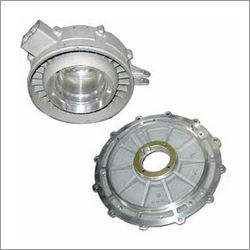
Tell us about your requirement

Price:
Quantity
Select Unit
- 50
- 100
- 200
- 250
- 500
- 1000+
Additional detail
Mobile number
Email

More Products in Aluminium Die Castings Category
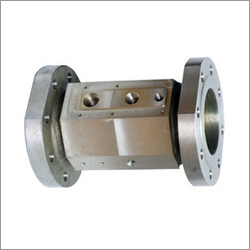
CNC Machined Parts
Price 350 INR / Kilograms
Minimum Order Quantity : 500 Kilograms
Product Type : CNC Machined Parts
Method : CNC Machining
Application : Automobile, Aerospace, Industrial Machinery, Electronics
Color : Silver Grey
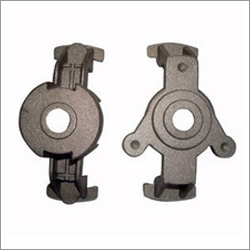
Aluminium Die Casting Components
Price 300-350 INR / Kilograms
Minimum Order Quantity : 500 Kilograms
Product Type : Die Cast Aluminium Component
Method : Die Casting
Application : Automobile, Electrical, Machinery Components
Color : Silver Grey
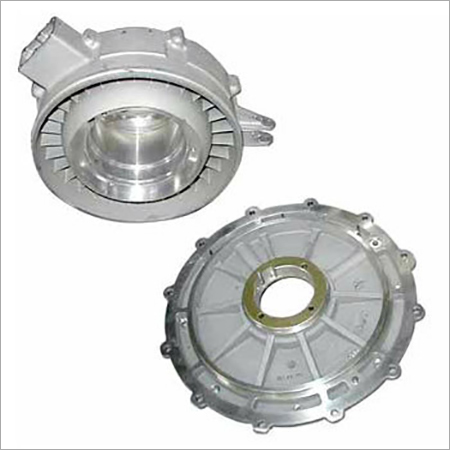
Aluminium Alloy Pressure Castings
Price 300-350 INR / Kilograms
Minimum Order Quantity : 500 Kilograms
Product Type : Aluminium Alloy Casting
Method : Pressure Casting
Application : Automobile, Electrical, Industrial Machinery
Color : Silver Grey
Aluminium Casting Components
Price 300-350 INR / Kilograms
Minimum Order Quantity : 500 Kilograms
Product Type : Aluminium Casting Component
Method : Casting
Application : Automobile, Machinery, Industrial Equipment
Color : Silver Grey

 Send Inquiry
Our Products

Gala No.10 & 19, Oberoi Industrial Estate, Opposite Varun Steel,Vasai - 401208, Maharashtra, India

Mr. Chirag
(Partner)
Mobile :08071931998
Mr. Rajesh Shah
(Partner)
Mobile :08071931998
 Send Inquiry
 Send SMS
Developed and Managed by Infocom Network Private Limited.


